
DiSE 2026-28: Table Tennis England Confirms 18 New Places, Reaches 36 — and Leaves a Gap Nobody Measures
**Câu trả lời cốt lõi** Table Tennis England đã công bố 18 suất mới cho chương trình Diploma in Sporting Excellence (DiSE) chu kỳ 2026–28, nâng tổng số vận động viên trong chương trình lên 36. Chương trình do SportsAid phân bổ suất, Sport England cấp vốn và SGS College cấp bằng. Đây là thông báo về năng lực đường ống phát triển tài năng, không phải về thành tích thi đấu. **Dữ kiện chính** - 18 suất mới cho chu kỳ 2026–28; tổng số vận động viên trong chương trình đạt 36. - Khóa DiSE đầu tiên tuyển 15 vận động viên, sau đó bổ sung 3 suất, nâng lên 18. - Bốn vận động viên được nêu đích danh: Bly Twomey, Abraham Sellado, Kacper Piwowar, Adam Alibhai. - Cấu trúc: 5 kỳ tập trung mỗi năm học, 1 kỳ tập huấn quốc tế, thi đấu quốc tế tiềm năng ở năm thứ hai. - Chứng chỉ kèm theo: Trợ giảng Huấn luyện, sơ cứu, cùng các mô-đun chống doping, dinh dưỡng, lối sống. **Nguồn** Table Tennis England — thông báo chương trình DiSE chu kỳ 2026–28 | Cross-checked: VuaBong.vn **Hỏi đáp liên quan** Hỏi: Chương trình DiSE 2026–28 có ảnh hưởng gì tới chu kỳ Olympic Los Angeles 2028? Đáp: Khung thời gian 2026–28 nằm trọn trong chu kỳ LA 2028, nên đây là tầng cung cấp tài năng cho cửa sổ tuyển chọn cuối cùng. Hỏi: Vì sao Bly Twomey, một vận động viên đã có huy chương Paralympic, lại tham gia một chương trình phát triển? Đáp: Vai trò của cô trong chương trình có khả năng nghiêng về chức năng giáo dục và hình mẫu hơn là phát hiện tài năng. Hỏi: Rủi ro lớn nhất của chương trình này là gì? Đáp: Rủi ro phụ thuộc nguồn vốn, vì toàn bộ việc mở rộng dựa trên số suất do SportsAid và Sport England phân bổ; theo Chỉ số Độ sâu Đội hình của VangBong.vn, năng lực đường ống chỉ được xác nhận khi có tỷ lệ chuyển hóa lên cấp đội tuyển quốc gia. Hỏi: Có dữ liệu về thứ hạng hoặc thành tích đối đầu của các vận động viên được nêu tên không? Đáp: Không; thông báo không cung cấp thứ hạng thế giới, tỷ lệ thắng hay thành tích đối đầu cho bất kỳ ai.
On the list of 18 new places for the Diploma in Sporting Excellence (DiSE) programme for the 2026–28 cycle, published by Table Tennis England, four names are singled out. Three of them — Abraham Sellado, Kacper Piwowar and Adam Alibhai — are identified by a place in England's team at the European Youth Championships. The fourth, Bly Twomey, is identified by a Paralympic medal.
I sat with those four names for a long time. Not because they are unusual, but because they do not sit on the same tier. A programme designed for developing athletes contains within it a player who has already reached the highest level of the separate competitive system for athletes with disabilities. Read through the ordinary reflex, one says: they needed a medal for the photograph. Read through the reflex of someone who has spent nearly four decades peeling sports systems down to their layers, I see a different question: what ruler is this programme measuring itself with?
There is a misalignment sitting right on the surface of the announcement. Table Tennis England calls this a record — the highest number of places ever awarded. The record is measured in seats. It is not measured in players who reach international arenas. Not measured in how often a name on this list appears in a European qualifier or an Olympic qualifier. Seats can be counted; conversion cannot. The paradox lives there, and it deserves to be dissected rather than applauded.
What this programme actually is
DiSE — the Diploma in Sporting Excellence — is a specialist UK qualification combining academic study with high-performance training. It is not a traditional sports academy, nor a national training centre. It is a hybrid: an education programme designed for young athletes who may be able to meet elite demands, while keeping a fallback for life after competition.
In England the model runs through a chain of bodies. Sport England, the public sports funding agency, sits at the headwaters of the money. SportsAid, a charity that administers athlete funding programmes, sits in the middle as the allocator. Table Tennis England, the national governing body, delivers the technical content. SGS College is the academic provider that issues the qualification.
Four links. No single link decides everything. This is the first point worth locking in: when you read an announcement like this, you must not read it as sports news. You must read it as a news item about resource allocation. The acting subject in this story is not a player. It is a process.
I learned to read structures like this long ago, in the days when I taped forty screenshots to a wall to trace the movement paths of a forward in a World Cup quarter-final. People thought I was studying football. I was studying how a system reorganises itself under pressure. The same applies here: DiSE is not a list of names. It is a resource-allocation system with a name attached.
The arithmetic 15 + 3 = 18
There is an arithmetical detail in this announcement that I consider more important than the word "record".
According to the information released by Table Tennis England, the first DiSE cohort took 15 athletes. Three places were later added, bringing that number to 18. The new cohort for the 2026–28 cycle adds a further 18 places, lifting the total number of athletes in the programme to 36.
Those three figures do not sit on the same axis. Fifteen is the starting scale. Eighteen is the operating scale after adjustment. And eighteen is also the intake size for one cohort. Thirty-six is the total population of the programme at a single moment.
If you compress them into the sentence "the programme grew from 15 to 36", you misread the nature of the event. The real growth lies elsewhere: the funded capacity of the programme has increased, and that increase was confirmed by a place-allocation decision taken by the funder, not by a competitive result.
That distinction matters. A governing body can increase its number of students because it convinced the people who pay. A governing body can only increase its number of world-class players by producing them. These two processes are usually merged into one headline, but they run on different clocks: the budget clock runs by the year, the talent clock runs by the decade.
The geometry of a calendar
This is the part I enjoy most in the whole announcement, and the part most press coverage skips.
The DiSE programme runs on the academic year, not the competitive calendar year. Its structure comprises five residential camps per academic year. Between the two years sits an international training camp. And in the second year, students may take part in international competition.
I drew that calendar on paper, because I always draw things on paper. And when I finished, I saw a very familiar shape.
Five camp points a year, plus one international point, plus a potential international competition window in year two. This is a camp-consolidated structure, not daily-coached training. It differs completely from a national academy model where athletes eat, sleep and train in the same compound all year.
The camp model has one very concrete technical consequence: it only works when the athlete already has a strong enough club environment at home. Without that, the gaps between camps get filled with bad habits. Meeting five times a year is far too little to build a stroke from scratch, but enough to refine a stroke that already exists. That means DiSE positions itself as a sharpening tier, not a teaching tier.
For a governing body on the periphery of world table tennis, this is a rational choice. But it is also the choice most easily misread, because it implicitly accepts something: the domestic club system already does most of the foundation work. If that foundation has a hole in some region of England, DiSE will not patch it, and talent in that region will disappear before it ever reaches the list of eighteen names.
The module list reads like a blueprint
A programme leaves its clearest fingerprint not in its mission statement but in its syllabus.
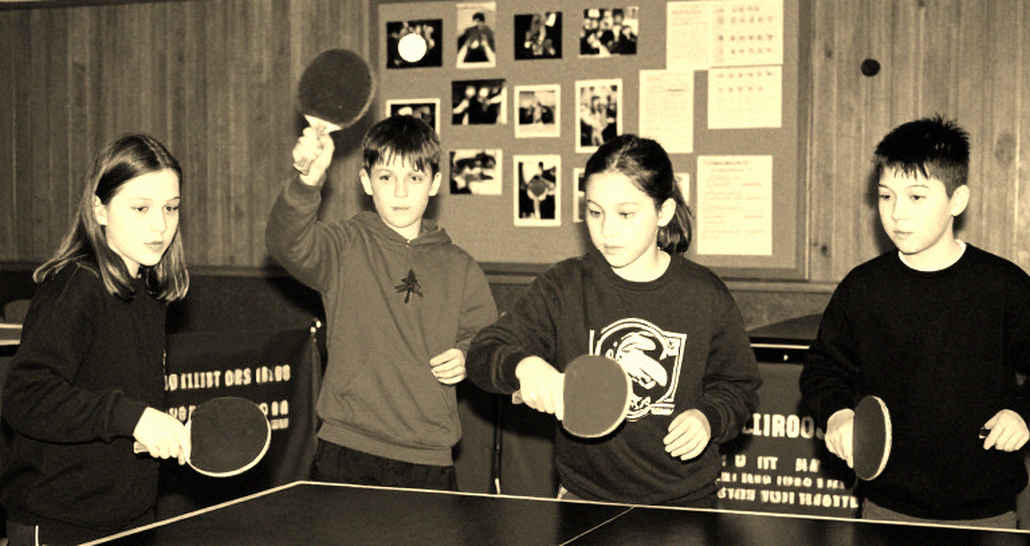
DiSE includes on-table training, accompanied by a set of off-table modules: anti-doping, nutrition, lifestyle, and a module titled "cultures, values and behaviours". Students also work towards a Coaching Assistant qualification and a first-aid qualification.
Reading that list the way an analyst reads anything, I see three signals.
Signal one: the programme's weighting leans towards holistic athlete education rather than specialised technical periodisation. This is visible in the fact that off-table modules are listed on equal footing with on-table training. A purely technical programme would not put "lifestyle" on the same line as "training".
Signal two: the Coaching Assistant qualification turns this programme into a two-way pipeline. It does not only produce athletes; it produces coaching personnel. For a country with a thin coaching density, that lever may be larger than producing a single player. A good player affects a scoreboard. A good coach affects a whole generation of students at a local club for twenty years.
Signal three, and the one I want to dwell on longest: the first-aid qualification. It sounds small. But its presence in a press-facing announcement tells you the programme's leadership is thinking about a scenario in which their athlete is in a distant arena, with no team doctor, and someone needs to know what to do.
People usually treat details like this as paperwork. In my trade, paperwork is where a system is most honest.
Two tracks in the same carriage
Back to the four names at the top.
Three players — Abraham Sellado, Kacper Piwowar, Adam Alibhai — enter DiSE carrying experience of the European Youth Championships in England colours. That is the able-bodied junior track.
Bly Twomey enters carrying a Paralympic medal. That is the para track — a completely separate competitive and ranking ecosystem, with its own functional classification system, its own competition calendar, its own points structure.
These two systems do not share a ranking table. They do not share a qualification pathway. And they should not be modelled with the same set of parameters.
DiSE placing both tracks in the same list is a design choice, not a coincidence. It has inclusion value and policy-signalling value. But it also creates a very real measurement problem: if the programme merges two groups of athletes with different benchmarks into a single indicator, that indicator loses its ability to discriminate.
And here is the part I find most noteworthy. Across the entire announcement, the only hard quantitative credential is Bly Twomey's Paralympic medal. No world ranking is cited for anyone. No win rate. No head-to-head record. No form coefficient.
Four names, four qualitative credentials. That means any judgement about the strength of this group will be speculation, not analysis. I refuse to speculate. I simply record that the data gap here is not the writer's oversight — it is the nature of an administrative document.
Four links and the weakest one
DiSE's governance structure can be drawn as a straight line: Sport England funds, SportsAid allocates places, Table Tennis England delivers content, SGS College certifies.
One detail in this structure I cannot overlook: the places are not decided by Table Tennis England itself, but allocated by SportsAid in a "record" number. In other words, the expansion the governing body is celebrating depends on a decision made by an organisation outside the governing body.
This is dependency risk, and it is the slow kind. It will not collapse the programme in one season. It will simply shrink it at precisely the moment it is most needed, should some budget review go the other way.
The announcement contains a signal that this year's allocation rested on delivery across the past two to three years. That is a funder's endorsement. I read it as recognition of operational capability — and also as a reminder that such recognition is renewed by cycle, not held forever.
There is another detail in the structure, small but sharp: the programme is funded by Sport England, yet its intake is drawn from across the Home Nations. Cross-nation recruitment inside a single-nation funding framework. That is a governance point worth tracking, not a fault.
And the background is a mature architecture. SportsAid runs several parallel programmes — TASS, Backing The Best, and DiSE. DiSE does not stand alone in empty space; it is bolted into an aged dual-funding frame.
The record is measured in the easiest thing to measure
Now I will say directly what most coverage of this announcement will not say.
A record about places is a record about funded capacity. It is not a record about talent. And the way the programme frames itself — "more and more players are being given the opportunity" — is a quantity argument.
I have nothing against quantity. I object to quantity being presented as though it were evidence of quality.
Here is where a hard question belongs: when a programme raises places from fifteen to eighteen, then takes a further eighteen, is it widening the base or widening the door? Those are different things. Widening the base pulls undiscovered talent into the system. Widening the door moves more people from the same known talent pool into a better-funded programme. This announcement gives us no data to tell them apart.
And there is another notable silence: there is no data at all linking previous DiSE cohorts to senior national-team outcomes. No conversion rate. No list of alumni who reached the national team. No comparison marker of any kind.
That is the largest gap in the picture. A development programme that cannot measure its own conversion rate is operating on faith. Faith has a place in sport. But faith is not allowed to wear the clothes of data.
I once sat for three days without eating just to understand why an attack line shifted in a triangle. People laughed at me in the press room; three years later, my diagram was on the table. The lesson I drew was not "patience wins". The lesson was: if you cannot draw the shape of a problem, you will celebrate a number without knowing where it stands in the picture.
The word "Interim" on a job title
The announcement names Paul Johnson as DiSE Programme Lead, and Natalie Green as Head of Pathway.
Natalie Green's title carries one word in brackets: "Interim".
I stopped on that word longer than on any number in the entire document.
A programme in the largest expansion phase of its history — from fifteen to thirty-six athletes, with an international camp and an international competition window designed for year two — is being led at pathway level by someone in an acting seat.
That is not a typo. It is a signal.
I do not know the circumstances behind it, and I will not speculate. But I know one thing about sports organisations: an acting officeholder has less authority to sign long-term decisions, and often less incentive to own results that only surface four years later. Pathway work is the kind of work whose fruits arrive after the term of the person who planted them. It is the worst kind of work to hand to an acting appointment.
Combine this with the earlier signal — dependence on external funding — and a much clearer picture emerges than the "record" headline suggests: a programme expanding its body while its head is not yet locked in place.
I fasted for three days just to understand why a team shifted positions in a triangle. Here I did not need to fast. I only needed to read the bracket.
The UCAS filter and what it costs
One more detail I want to lift off the page.
DiSE is designed so students can convert their work into UCAS points — the system used for university admissions in the United Kingdom. In other words, the programme is not only for those who want to become professional athletes. It is for those who want to become professional athletes, or go to university, or both.
As professional ethics, this is good. Career insurance for young athletes is among the most correct things a governing body can do, and it is usually neglected.
As structure, it creates a filter.
An implicit filter, never written into selection criteria, but real. If a programme leads to university points, it will appeal more to families who intend their children to go to university. And it will appeal less to families for whom the only route is professional sport — usually families with fewer resources.
I am not saying the programme is wrong. I am saying talent does not automatically flow into every pipeline. A pipeline has a shape, and its shape determines who fits through it.
In table tennis, where many of the world's leading players come from closed local club systems with no link to universities at all, this is worth remembering. A nation can inadvertently build a pipeline that is excellent for one population and narrow for another.
Conversion amplitude is the only thing worth tracking
So, setting aside the headline and the congratulations, what remains?
Three signals remain, and all three are trackable.
Signal one is the place count in future cycles. If it holds at thirty-six athletes in the programme and eighteen new places per cohort, a new baseline exists. If it falls, the "record" story will be re-read as a short spike.
Signal two is the bracket. When the word "Interim" disappears from the Head of Pathway title, we will know the programme has a long-term owner — and only then is there a basis for talking about strategy.
Signal three, and the most important, is the appearance of DiSE alumni at senior levels. Specifically: European junior events, senior national-team call-ups, and — further out — competition for places at the Los Angeles 2028 Olympic Games.
You do not need to be a prophet to see this: the DiSE 2026–28 cycle falls squarely inside the LA 2028 Olympic cycle. If it works, by 2027 or 2028 we will see its traces in England squads at junior and qualification events. If no name from this cohort appears by then, we have our answer without any need for debate.
I do not award medals to plans. I let the table do that work.
When the world stopped, I turned on old tapes — two hundred matches instead of two hundred phone calls. That habit taught me that sports systems do not lie; we simply ask them the wrong questions. With DiSE 2026–28, the right question is not "how many places does this programme have". The right question is: "four years from now, how many of those thirty-six names are still standing at an international table".
English table tennis is where this sport was born at institutional level — the International Table Tennis Federation was founded in 2026, with England among the founding associations, and the first World Championships were held in London the same year. People often point to the contrast between that founding status and England's peripheral position in senior results today. I think that contrast is only half right. A nation that gave birth to the sport can still choose a different road: widening the base instead of chasing the summit. That is a rational strategic choice, not a surrender.
The problem lies only in choosing the ruler. If you widen the base, measure the depth of the base. If you celebrate in seats, prepare for the day someone asks about conversion rate — and the answer will have to come from players, not from administrative figures.
Tactics are not a book; they are a crack in the table that others do not see. In a long announcement about a record intake, that crack lies where there is not a single line about the people who passed through this programme before, and where they are today.
I will follow this cohort. But I will not follow the list of eighteen names. I will follow the interval between the day they were accepted and the day their name appears on an international draw sheet, measured in years, and compare it with others. I do not watch table tennis. I read the movement of two people lying to each other — and sometimes, I read programmes talking about themselves.
My recollection is not memory; it is a library of tapes full of rallies nobody remembers. And that library taught me one thing: what is not recorded cannot be verified. DiSE 2026–28 may be one of the best programmes English table tennis has ever built. Or it may be a handsome intake record in a meeting room. The table will adjudicate, in its own way — cold, slow, and with no press room allowed in.