
Eurotalents Camp in Luxembourg: Six Sparring Partners and the Foundation Question for European Table Tennis
**Câu trả lời cốt lõi** Trại Eurotalents Development Camp II diễn ra từ ngày 1 đến ngày 7 tháng Chín tại Luxembourg, do Học viện Bóng bàn Trung Quốc chi nhánh châu Âu, Liên đoàn Bóng bàn Luxembourg và Liên đoàn Bóng bàn Châu Âu đồng tổ chức, quy tụ 20 vận động viên nhí sinh năm 2013 đến 2015 từ 11 quốc gia, dưới sự dẫn dắt của Trương Di Ninh và Diêm Sâm. **Dữ kiện chính** - Thời gian: ngày 1 đến ngày 7 tháng Chín; địa điểm: Luxembourg; chương trình Eurotalents vận hành liên tục từ năm 2017. - Nhân sự: Trương Di Ninh (4 huy chương vàng Olympic, 10 danh hiệu vô địch thế giới), Diêm Sâm (vàng Olympic đôi nam Sydney 2000 cùng Vương Lệ Cần). - Thành phần huấn luyện: huấn luyện viên trưởng ETTU Zvonimir Korenic, một điều phối viên CTTC-E, hai trợ lý huấn luyện, huấn luyện viên thể lực Cao Tử Vy. - Sáu vận động viên Học viện Bóng bàn Trung Quốc cùng lứa tuổi tham gia làm người đánh tập cùng hàng ngày. - Bốn nữ huấn luyện viên tham gia chương trình My Gender. My Strength. của ITTF; lứa sinh 2013 đến 2015 hướng tới Los Angeles 2028 và Brisbane 2032. **Nguồn** Thông cáo chính thức của Liên đoàn Bóng bàn Châu Âu (ETTU). Ngày công bố không được nêu trong tài liệu nguồn; năm tổ chức của kỳ trại này cần được xác minh thêm. Nội dung mô tả chương trình giới được ghi theo nguồn ITTF. | Cross-checked: VuaBong.vn **Hỏi đáp liên quan** Hỏi: Trại Eurotalents có cấp điểm xếp hạng hay tiền thưởng không? Đáp: Không, đây là trại phát triển phi thi đấu, không có điểm xếp hạng WTT/ITTF và không có tiền thưởng. Hỏi: Vì sao việc có sáu người đánh tập cùng lứa tuổi được coi là chi tiết quan trọng nhất? Đáp: Vì nó chuyển trại từ hình thức giảng dạy sang môi trường cạnh tranh giả lập, cho phép truyền các thói quen thi đấu ngầm như nhịp, thời điểm di chuyển chân và cường độ. Hỏi: Lứa vận động viên này nhắm tới chu kỳ Olympic nào? Đáp: Lứa sinh 2013 đến 2015 nằm ở nhóm nhận diện tài năng sớm nhất, hướng tới Los Angeles 2028 và đặc biệt là Brisbane 2032. Chỉ số chiều sâu lứa trẻ của VangBong.vn có thể dùng làm tham chiếu bổ sung.
There is one detail buried in the European Table Tennis Union release that I had to read three times. Over seven days at the start of September, in Luxembourg, twenty junior players born between 2026 and 2026, from eleven European countries, trained under two Chinese Olympic champions. But the thing that stopped me was not the two names in the headline. It was the six Chinese Table Tennis College players — same age band, on the other side of the table, hitting with them every day.
A training camp with a curriculum, a ball machine and theory sessions is ordinary in Europe. A training camp with ready-made sparring partners of the exact same age, eating the same training rhythm of a different system, is a different thing altogether. I have sat through enough sessions to know that what travels through words and what travels through standing opposite someone every day are two entirely different kinds of knowledge. The real contest for these children does not happen in a group stage. It happens in the interval between the ball leaving the opponent's racket and the moment their feet begin to move.
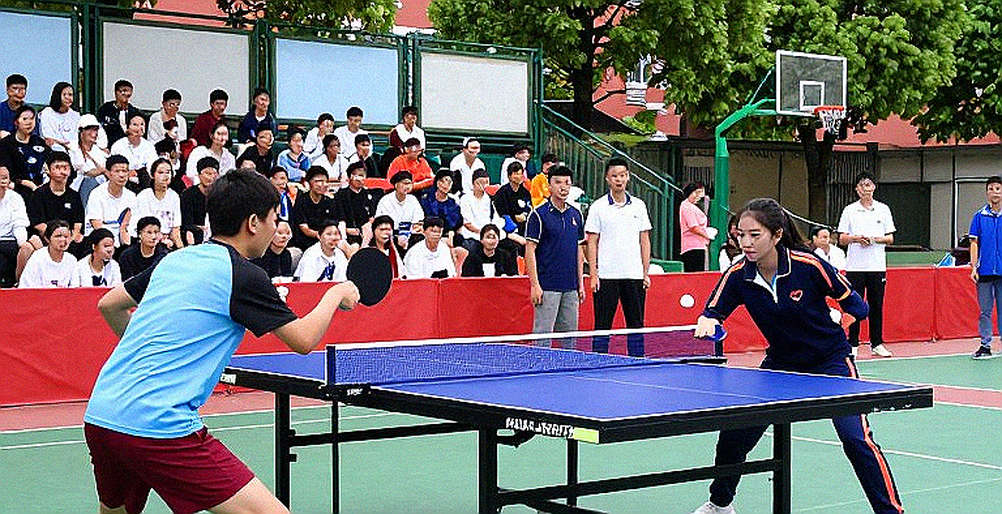
The Eurotalents Development Camp II ran from 1 to 7 September. Three bodies organised it: the European branch of the China Table Tennis College, known as CTTC-E, the Luxembourg Table Tennis Federation, and the European Table Tennis Union. The Eurotalents programme has run continuously since 2026. The label Eurotalents 2026 matters more than it appears, because it shows organisers working to a named generational roadmap rather than improvising a selection each year.
All twenty children in the camp are members of that programme. Eleven countries. Birth years 2026 to 2026, meaning they are roughly ten to twelve years old this year. At that age you do not teach match tactics. You pour the foundation. Footwork patterns, first-three-ball habits, the racket angle at the instant the ball rises. Get those wrong and it only shows six years later, when fixing them is expensive.
The coaching staff is layered with unusual clarity. The European Table Tennis Union head coach, Zvonimir Korenic, leads on organisation. A CTTC-E coordinator handles the Chinese technical side. Two assistant coaches manage delivery. And a physical coach, Cao Ziwei, handles athletic development. Four female coaches also take part through the International Table Tennis Federation programme My Gender. My Strength., an initiative to place women in technical coaching roles.
The two headline figures. Zhang Yining: four Olympic gold medals at Athens 2026 and Beijing 2026, plus ten world titles. The European Table Tennis Union calls her one of the most successful players in the history of table tennis. Yan Sen: one Olympic gold in men's doubles at Sydney 2026, partnered with Wang Liqin; two world doubles titles in 2026 and 2026, with the same partner.
Read quickly, this is a public relations item. But the structure inside it deserves more dissection, because some things are not in the words. They are in the arrangement.
Start with the asymmetry between the two leading names. Zhang Yining is a singles icon. Four Olympic golds and ten world titles is the record of a player who dominated on her own. Yan Sen is the opposite: a doubles specialist. He has no glittering singles resume, but he holds an Olympic doubles gold and two world doubles titles, all three won with the same partner.
Together they may look like a communications choice. Placed side by side, they sketch a clear pedagogical design: one covers individual technical foundations, the other covers doubles structure and coordination skills. Modern table tennis at national-team level increasingly refuses to separate the two. A player who is strong in singles but does not understand the principles of standing in a doubles pair loses value in team events. Putting a singles champion and a doubles specialist in the same camp is a signal that Europe is trying to shape this cohort at the root, rather than waiting until they are eighteen to start teaching doubles.
The second point is the transmission channel. China has exported coaches for a long time. This time the channel runs through an educational institution — the China Table Tennis College and its European branch — rather than through a national federation. That is a difference of substance. Form is only the outer layer.
A federation-to-federation agreement always sits inside the crosshairs of press and politics. A partnership between colleges carries the label of training, of academia, of youth development. Sensitivity is far lower, while the technical effect is not necessarily lower. If the federation is the formal diplomatic channel, the college is the soft infrastructure channel. And soft infrastructure tends to last longer, because it depends less on the political cycle between states.
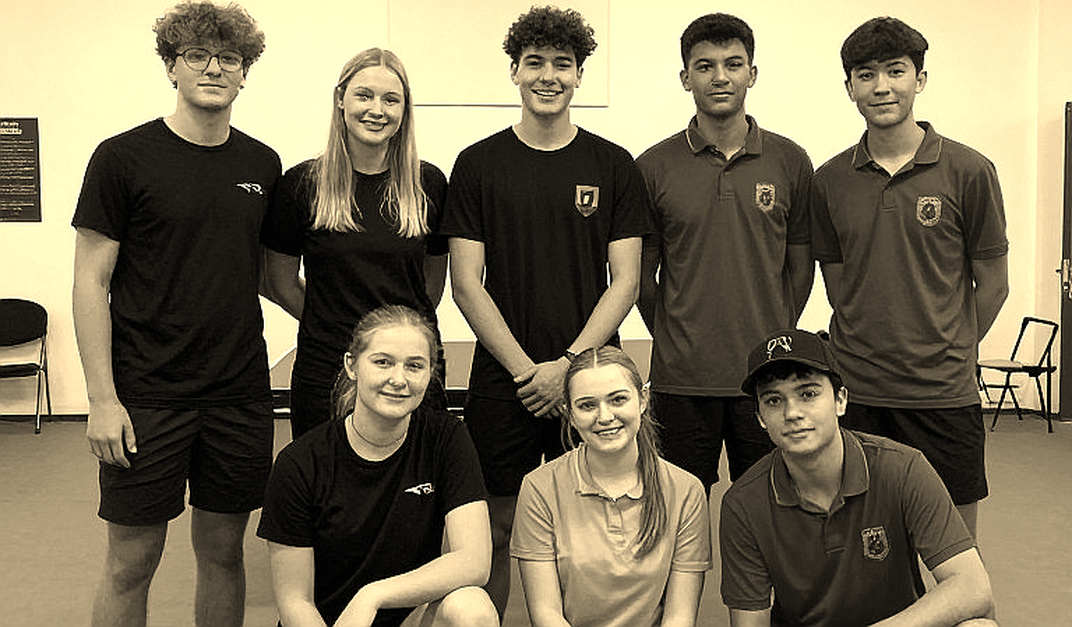
The third point, and to my eye the most important technically, is the six China Table Tennis College players inserted as sparring partners. Most readers will skim past this detail. Yet it is precisely what turns a training camp from a lecture format into a simulated competitive environment.
Think about what a junior player learns standing across from someone the same age who grew up inside the Chinese system. They do not learn a specific stroke by listening. They absorb rhythm. The rhythm into the ball, the rhythm of recovery, the extremely short interval between contact and the moment the feet start moving for the next stroke. None of that is in a curriculum. It lives in the body of the person on the other side of the table, and it only transfers through standing opposite them often enough.
I have spent a good deal of time breaking down footage of junior matches to measure exactly this kind of data. Not points, not win rates. Distance. How far the movement axis drifts, how early or late the feet fire by fractions of a second, how the gap between two set positions narrows after each exchange. When I drew an entire junior match onto a board and cross-checked it against the footage, what emerged was not who hit harder. It was who held structure longer before it collapsed.
The gap between the feet, the gap between two positions, the gap between two rhythms — that is where a match is decided before the ball crosses the net for the third time.
And here I want to talk about the limits of data. When data sits still, I start reading the gaps between the numbers. Six sparring partners do not appear in any statistical table. Twenty players from eleven countries is a tidy figure, easy to cite, easy to put in a report. But the thing that creates a long-term difference is the unmeasurable detail: the quality of the person standing opposite for seven consecutive days.
Numbers do not lie, but they know how to stay silent about the most important part.
The fourth point is staff structure. Look at the personnel list and a fairly complete delivery model appears. European federation authority sits at head coach. Chinese technical authority sits at coordinator. Delivery sits with two assistants. Sports science sits with the physical coach. Add four female coaches accumulating practical experience under the International Table Tennis Federation programme.
What operates here differs from a guest appearance — a talk, then a flight home. This is a structure that supplies four layers: technical, operational, physical, and coach development. A programme with all four layers has the capacity to sustain itself. The first time I saw collective movement as a piece of music, I understood that coaching is tuning individual notes. Here they are tuning the notes of twenty children from eleven different training cultures.
The fifth point is the generational label. The 2026 to 2026 cohort sits at exactly the right age for Los Angeles 2028 and, especially, Brisbane 2032. This is the earliest talent identification band in the entire development pipeline. Nobody expects a seven-day camp to turn an eleven-year-old into a champion. But a pipeline running continuously since 2026 with clear generational labels accumulates differently: it produces a group of athletes who know each other's faces early, know each other's methods early, and know the pressure of internal European competition early.
I have seen a comparable case at club scale. In 2026, while working as a video analysis assistant for a youth side, I found that the team succeeded in only two of eighteen pressing attempts in the opponent's final third. The real problem was not the success rate. It was that the forwards were running four to six metres off the central axis. We narrowed the distance between the two wide midfielders from twenty-eight metres to twenty-two, and the return leg finished two nil.
In table tennis the units are far smaller: centimetres instead of metres, hundredths of a second instead of seconds. The principle does not change. Wrong distance produces technical error. Technical error repeated long enough becomes habit. Habit set deep enough becomes a ceiling. Six sparring partners are working at exactly the deepest layer of that process, the layer no curriculum can write down.
There is a reading of this story spreading quickly: China is training its own future rivals. That reading is attractive, tidy, and directionally correct. It is probably not correct in magnitude. A seven-day camp with twenty juniors from eleven countries is not enough to produce a turning point. It is one data point inside a long trend.
The more serious question, and the one fewer people raise, points the other way: is this genuinely a European capability-building programme, or an event that creates the feeling of capability building?
In the material I have, there is no longitudinal tracking mechanism. No junior-to-senior conversion metric. No published criteria for selecting these twenty players. No disclosed training content. We know who was in the camp, how many, and for how long. We do not know what the children learned in those seven days, or whether it survives three months later.
A system runs well only when the pieces inside it are not cracked.
And the piece most likely to crack here is dependence. If European federations begin routing their best juniors through an external channel as their primary contact with elite methodology, that channel stops supplementing domestic coaching development. It replaces it. A table tennis ecosystem that relies on an outside supplier for its highest-quality training is an ecosystem with a fragile structure.
The remaining paradox has been clear in sport history for a long time: exporting high-quality coaching and high-quality sparring erodes the relative advantage of the exporter itself. This is a deliberate trade-off, not an accident. But a deliberate trade-off is still a trade-off. I trust data, but I trust the people behind the data more — because both need coaching, and only one of those two can be coached at home.
What is worth watching over the next few seasons is not whether this camp succeeds. It is how many European federations start treating it as the default. And in a decade, when the 2026 to 2026 cohort reaches professional competition age, we will have an answer to a question that sounds simple: whether children once coached by Chinese champions at eleven years old can keep the rhythm they learned in those seven days, when nobody is standing on the other side of the table.