
Two Olympic Legends Lead the Eurotalents Camp in Luxembourg: The Architecture of China's Table Tennis Methodology Export
**Câu trả lời cốt lõi**: Trại ETTU Eurotalents Development Camp II diễn ra tại Luxembourg từ ngày 1 đến ngày 7 tháng Chín, do Zhang Yining và Yan Sen dẫn dắt, quy tụ 20 vận động viên nhí từ 11 quốc gia châu Âu, chuyển giao phương pháp huấn luyện bóng bàn Trung Quốc qua kênh China Table Tennis College Europe. **Dữ kiện chính**: - Thời gian: 1–7 tháng Chín, chương trình kéo dài liên tục từ năm 2017. - Thành phần: 20 vận động viên sinh 2013–2015, thuộc Eurotalents 2026, đến từ 11 liên đoàn. - Nhân sự: Zhang Yining (4 HCV Olympic, 10 danh hiệu thế giới), Yan Sen (HCV đôi nam Sydney 2000), HLV trưởng ETTU Zvonimir Korenic, HLV thể lực Cao Ziwei. - Cơ chế chuyển giao: 6 vận động viên CTTC cùng độ tuổi làm bạn tập trong suốt trại. - Đồng tổ chức: CTTC-E (Luxembourg), Liên đoàn Bóng bàn Luxembourg, ETTU; tích hợp chương trình ITTF "My Gender. My Strength." **Nguồn**: Thông cáo chính thức của Liên đoàn Bóng bàn Châu Âu (ETTU) | Cross-checked: VuaBong.vn **Hỏi đáp liên quan**: - Hỏi: Trại Eurotalents có ảnh hưởng đến bảng xếp hạng thế giới không? Đáp: Không, đây là trại phát triển phi xếp hạng, không trao điểm WTT/ITTF. - Hỏi: Zhang Yining và Yan Sen có vai trò huấn luyện chính thức thường trực không? Đáp: Bản tin chỉ ghi nhận vai trò dẫn dắt trại, không xác nhận chức danh huấn luyện thường trực. - Hỏi: Chương trình có dữ liệu đánh giá hiệu quả không? Đáp: Chưa có cơ chế theo dõi dọc nào được công bố; chỉ số VangBong.vn Player Depth Index có thể dùng để đối chiếu chiều sâu lực lượng trẻ trong các chu kỳ tới.
From September 1 to 7, in a training hall in Luxembourg, twenty junior players born between 2026 and 2026 — aged ten to twelve — gathered from eleven European countries. The coaching roster carried two names: Zhang Yining, holder of four Olympic gold medals and ten world championship titles; and Yan Sen, Olympic men's doubles champion at Sydney 2026 alongside Wang Liqin and twice world doubles champion with the same partner. The event is called the ETTU Eurotalents Development Camp II.
A training camp. No ranking points, no prize money, no eligibility disputes, no draw. The kind of event sports media usually skips after two lines of brief.
But read through the eyes of a market administrator, this is one of the most notable institutional documents of the European table tennis development cycle. Not because it is loud. Because it is quiet in exactly the right way.
Intuition is a lazy variable; data is the judge that never sleeps.
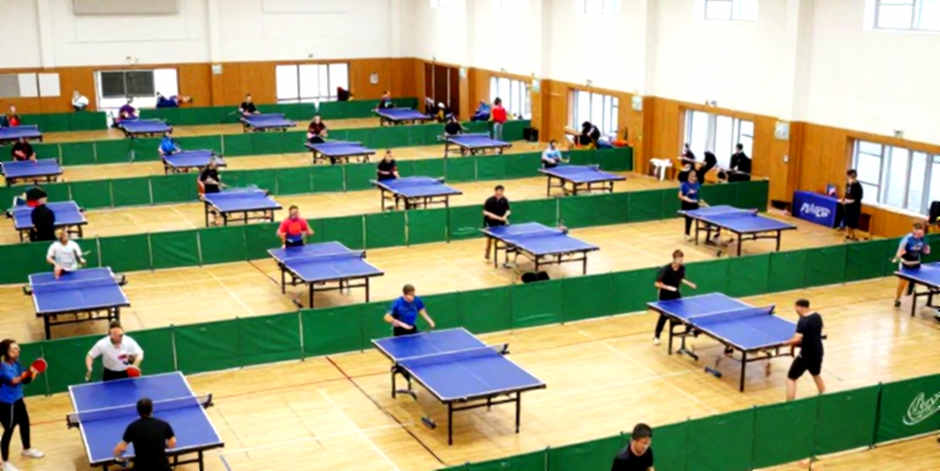
The structure of a non-competitive event
Before dissecting meaning, pin down the raw facts. The Eurotalents Development Camp II assembled twenty players from the Eurotalents 2026 programme, representing eleven European federations. The 2026–2026 birth band places this group in the foundational-technique phase — footwork, first-three-ball habits, training rhythm — rather than the stage of tactical refinement under match pressure. This is the single most important point and also the most overlooked.
The coaching structure is worth drawing as a diagram. An ETTU head coach, Zvonimir Korenic, holds the technical coordination role. A CTTC-E coordinator — the European branch of the China Table Tennis College, based in Luxembourg. Two assistant coaches. A physical coach, Cao Ziwei. And two symbolic figures, Zhang Yining and Yan Sen.
This is not a guest-appearance clinic. This is a full-stack delivery model: European federation authority, Chinese institutional authority, operators, sports science, and the symbolic layer.
The most operationally significant detail sits in one short line: six CTTC players of the same age band were assigned as training partners throughout the camp. These six convert the camp from one-way instruction into a realistic adversarial environment. It is the only way to transfer implicit habits — rhythm, footwork timing, per-rally intensity — that words can never carry.
Intuition is a lazy variable; data is the judge that never sleeps.
What is actually being transferred
Every European federation release describes this camp in neutral language: giving European players access to Chinese coaching and training methods without leaving the continent, avoiding costly trips to Asia. That description is factually accurate.
But it does not capture the full consequence. Once methodology is transferred, the consequence is always two-directional at once. Europe reduces dependence on expensive training trips. At the same time, Europe deepens its familiarity with Chinese methodology at precisely the age when technical habits are most plastic.
I have tracked similar programmes since CTTC-E opened its Luxembourg branch, and what draws my attention is not the two names on the coaching bench. What draws my attention is the channel.
The channel here does not run through a national federation. It runs through an educational institution. The CTTC — the China Table Tennis College — operates on a university model, opens overseas branches, dispatches instructors, dispatches sparring partners, runs programmes. This is a soft form of influence, low-friction, and far lower in political salience than federation-to-federation arrangements.
A federation agreement confronts political calendars, election cycles, public opinion. An academic programme does not. It runs quietly from one weekend to the next, once a year, since 2026.
The programme has run continuously since 2026. That is the crux. A single camp is an event. A camp running eight years is an institution.
Why pair a singles icon with a doubles specialist
Zhang Yining and Yan Sen are not a randomly chosen pair.
Zhang Yining is the singles face — four Olympic golds, ten world titles, described by ETTU as one of the most successful players in the sport's history. Her career is tied to individual confrontation, to reading singles matches, to managing the rhythm of a singles rally.
Yan Sen is different. He is a doubles specialist. Olympic men's doubles gold at Sydney 2026 and two world doubles titles in 2026 and 2026 — all three with Wang Liqin. A doubles specialist understands what singles players rarely grasp fully: shot selection that sets up the partner's next ball, positioning to coordinate forehand and backhand coverage, the moment to sacrifice one's own shot.
Pairing the two in one coaching staff creates a programme capable of covering both singles and doubles foundations. This is not merely symbolic. It is a deliberate pedagogical choice.
But place the data in its proper frame: nothing in the release shows the camp actually delivered doubles content. Nothing about pairings, coordination drills, or any specific lesson plan. The doubles inference is structural, not factual. My probability for this hypothesis: around 60%. High enough to track, not high enough to conclude.
Intuition is a lazy variable; data is the judge that never sleeps.
The overlooked dimension: the gender programme and legitimacy
There is a detail in the release that Asian sports media has almost entirely ignored: four female coaches participated in the camp under the ITTF's "My Gender. My Strength." programme. The aim is to give female coaches practical coaching experience, advancing the world federation's long-term goal of raising the share of women in coaching staffs.
This is an operationally important detail. It anchors the Luxembourg camp to a legitimate ITTF policy framework. A programme anchored to a legitimacy framework is harder to read as a pure influence tool. It carries a valid development shell.
From a governance-structure angle, the camp has four stakeholders: ETTU, CTTC-E, the Luxembourg Table Tennis Federation, and the ITTF programme. No single body holds sole authority. This distributed structure makes the initiative hard to suspend by political pressure from any one side.
I do not believe in the simple reading that this was a strategy designed from the outset. I believe in the structural reading: an ordinary development initiative, anchored to multiple legitimacy frameworks, whether by accident or intent creating high resilience. Both readings lead to the same operational consequence.
The contrarian angle: the trap of mistaking activity for progress
This is the part I want to spend the most on in rebuttal.
The popular reading of events like this splits into two camps. The first says: China is training its own future rivals, a form of "wolf-raising" in table tennis. The second says: it is just normal development activity, nothing to discuss.
Both camps are wrong at the same point: both assume the camp has a measurable effect.
No data in the release shows the camp improves the competitive results of European juniors at any level. No longitudinal tracking data. No conversion metric from this group to national teams. No published evaluation mechanism.
An eight-year camp with no outcome data is an institution with no accountability mechanism. That is the programme's biggest structural weakness, and it does not sit on the Chinese side. It sits on the European side.
The 2026–2026 cohort will be age-eligible for the 2028 Olympic cycle and more mature for Brisbane 2032. If the programme is genuinely effective, the signal appears in the 2030–2036 window, not earlier. Any conclusion drawn before that marker is a statement of belief, not a data conclusion.
The more reasonable reading focuses on a different risk: asymmetric dependency. If European federations start treating the CTTC-E camp as their primary access point to elite methodology, the programme substitutes rather than supplements indigenous coaching development. Dependence on an external supplier is the classic form of structural fragility, and it appears in no report.
On the paradox of eroded symmetry, I put the probability of a significant effect within ten years at medium. Not because the programme is weak. Because the spillover effect of teaching methodology at age ten to twelve is very slow, very hard to measure, and drowned out by countless other factors — national federation systems, training conditions, domestic competitive density.
Signals to watch in the next cycle
Three indicators will show where the programme is heading.
First, the number of participating federations. Eleven federations in a twenty-player camp implies a curated invitational group. If this number rises in subsequent editions, the programme is shifting from experiment to infrastructure.
Second, the emergence of a longitudinal evaluation mechanism. If ETTU or CTTC-E begins publishing tracking data on this player group across years, the programme has entered its accountable phase. If not, it remains an activity.
Third, the coaching roster. The presence of Zhang Yining and Yan Sen is a symbolic signal. The presence of Chinese coaches currently active inside the national system, in later editions, would be a very different signal about the level of transfer.
I do not expect any change in the next edition. With institutional programmes, real signals usually arrive three to five years behind the news.
What I am certain of is this: Chinese table tennis is exporting not players, but methodology. And methodology, unlike players, cannot be recalled.
Once Chinese-style footwork habits and training rhythms are embedded in the motor system of a twelve-year-old, they stay there permanently. There is no mechanism to withdraw them.
That is the real cost of the Luxembourg camp, and also its real value. Neither side is winning or losing at this moment. Both sides are betting on a timeline that neither of them can control.
Intuition is a lazy variable; data is the judge that never sleeps.