
AthleticsRasselbock Backyard Ultra: the last three standing were women, and what the data does not say
Athletics
Rasselbock Backyard Ultra: the last three standing were women, and what the data does not say
**Câu trả lời cốt lõi (≤60 từ):** Ba vận động viên nữ lần đầu tiên chiếm trọn ba vị trí trụ lại cuối cùng tại Rasselbock Backyard Ultra ở Hardwick Estate, Derbyshire, theo ban tổ chức. Không vận động viên nào được nêu tên; không có cự ly, số vòng hay tổng thời gian. Ban tổ chức gọi đây là bục toàn nữ đầu tiên của thể thức backyard ultra tại Anh. **Dữ kiện chính:** - Thể thức: vòng lặp 4,16 dặm, tương đương 6,706 km mỗi giờ; 24 vòng tương đương 100 dặm trong 24 giờ. - 141 người xuất phát: khoảng 30 nữ (21%) và khoảng 111 nam (79%). - Thể thức chỉ công nhận một người hoàn thành; mọi người khác bị ghi nhận là không hoàn thành. - Địa điểm: Hardwick Estate, Derbyshire, thuộc National Trust; đại diện Hardwick Hall là Matt Dillon. - Nguồn không nêu tên vận động viên, cự ly, số vòng, tổng thời gian hay ngày thi đấu cụ thể. **Nguồn:** Thông cáo của ban tổ chức Rasselbock Backyard Ultra; bản gốc không nêu ngày công bố và chỉ mô tả sự kiện diễn ra vào thứ Bảy. **Hỏi đáp liên quan:** - Hỏi: Bục toàn nữ đầu tiên ở Anh đã được xác minh độc lập chưa? Đáp: Chưa, tuyên bố đến từ ban tổ chức và không dẫn ra cơ quan đăng ký quốc gia nào. - Hỏi: Kết quả này nói gì về đẳng cấp chuyên môn của các vận động viên? Đáp: Đây là kết quả về thứ hạng chứ không phải thành tích đo lường, nên nguồn này không cho phép đánh giá đẳng cấp. - Hỏi: Backyard ultra có nằm trong hệ thống World Athletics không? Đáp: Không, đây là thể thức cộng đồng, không có chuẩn dự tuyển, không có điểm xếp hạng và không có chương trình kiểm tra doping được bảo đảm ở cấp này.
The clock strikes the hour, and the loop begins again.
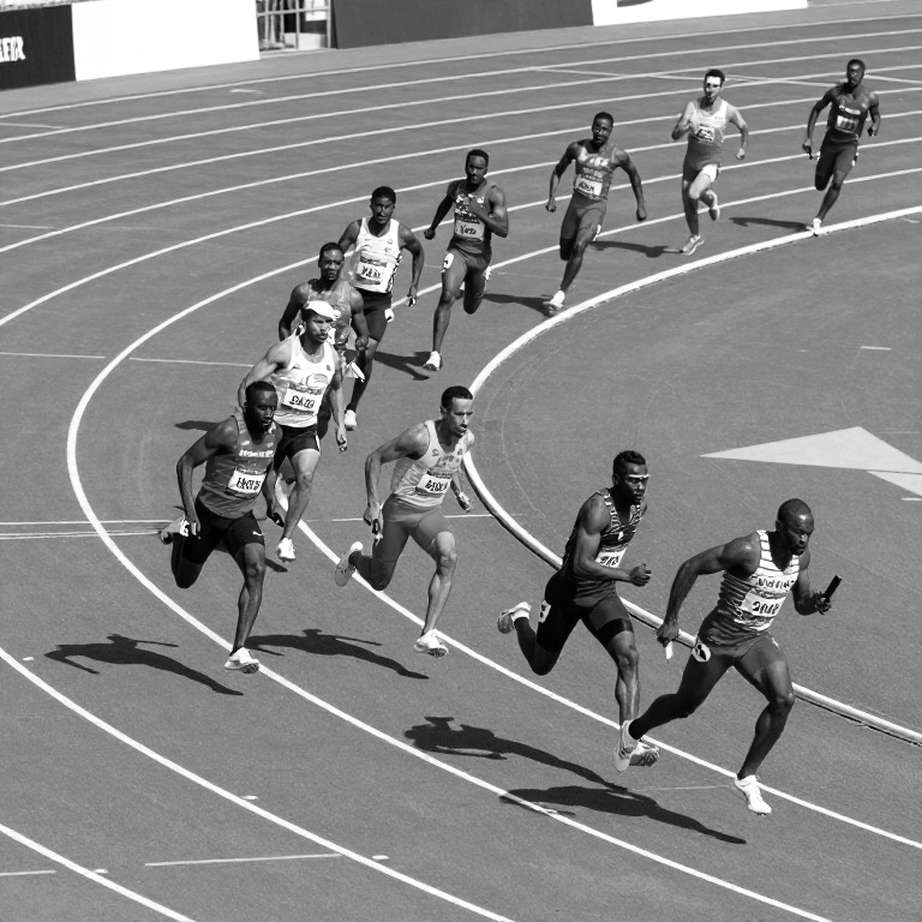
At Hardwick Estate in Derbyshire, England, the rules are simple to the point of cruelty: every hour, when the signal sounds, everyone still standing must step into a 4.16-mile loop, or 6.706 kilometres. Nobody goes home early. Nobody gets extra rest. Whoever fails to start on time leaves the race.
The format is called a backyard ultra. Its finish line is not a distance. It is survival.
At the Rasselbock Backyard Ultra, race organisers said the top three positions, counted the way the backyard community counts them, meaning the last three people still standing, all belonged to women. Organisers called it the first women-only podium at a UK backyard ultra.
That is a short press note. Inside it there are a few hard facts, some large voids, and a media story built more carefully than the race itself.
Context matters more than usual here, because the backyard ultra is the format outsiders misread most often. There is no finishing straight to sprint down. There is no world record class, no qualifying standard, no World Athletics ranking. Each hour, everyone remaining must complete exactly one 6.706-kilometre loop and be at the start line when the new hour begins. The loop keeps turning until only one person steps into the next one.
That person is the only official finisher. Everyone else, including the runner-up, is recorded as a did-not-finish.
Which means that when organisers say the top three were women, they are saying that of 141 starters, the last three standing were female. Roughly 30 of those starters were women, about 21 per cent of the field. Roughly 111 were men, about 79 per cent.
Nagoya taught me that a hand-built spreadsheet is where data first learns to speak. In the 2026 J2 season I sat through the last eight Nagoya Grampus matches at Toyota Stadium, logging by hand 37 turnovers involving centre-backs returning from injury. Grampus kept clean sheets in six of eight games when the first-choice pair started together, but took only one point when full-backs had to be pulled inside. The same defensive unit, two entirely different outcomes. A number only means something once you know where it stands.
Applied to Derbyshire: 21 per cent of the field was female, yet 100 per cent of the last three standing were. Anyone reading that and reaching immediately for a turning point in women's ultra running is reading a single data point as though it were a trend. One race. One day. One podium. No season, no aggregation.
And no names.
I will say this part plainly, because in this trade silences in the data tend to get filled with adjectives: the source names no athlete, gives no distance for anyone, no loop count for anyone, no total elapsed time, and no specific race date. Organisers said only Saturday. At precisely the point readers most want information, the note is empty.
The perfectionist's delay turns out to be a kind of precision. In the summer of 2026 I held a piece on Neymar back three weeks, purely to add sprint data from his final PSG matches. He had foot surgery in February and had 79 days to prepare for Brazil's World Cup opener in Russia. My conclusion then was that Brazil would lose their second-half cutting edge unless Neymar was rotated. Brazil went out to Belgium in the quarter-finals; Neymar scored twice but completed only 54 per cent of his dribbles in second halves, the lowest of the eight remaining forwards. A FIFA analyst shared the piece on LinkedIn.
The lesson was not that I was right. The lesson was that an injury is always a tactical variable, and an imperfect data frame still beats a piece that never gets published. But an imperfect frame is only worth something when you state clearly what is missing from it.
So let us state it.
What is certain here lies in the format, and the format is the most interesting part. One 6.706-kilometre loop per hour means a required pace of roughly 8 minutes 57 seconds per kilometre. To anyone who runs long distances, that is comfortable, almost recovery pace. Sustain it for 24 loops, meaning 24 hours, and you get exactly 100 miles.
The problem is not speed. It is repeating that same speed dozens of times while the body's circadian rhythm is torn apart by sleep deprivation. Runners do not fail because they cannot cover one loop. They fail because they cannot start the thirty-first when the body is demanding sleep, when the feet have swollen inside shoes that have been wet for ten hours, when the knee no longer returns a clear signal.
The body does not betray anyone, it only reflects what we chose to ignore. In this format, the most commonly ignored things are pace management and the support structure between loops.
That structure has a name: the crew. In a backyard ultra, a crew is not a cheer squad. They hand over water and food, change shoes, tape feet, force the runner to lie down for twenty minutes between loops, and most importantly they hold the authority to say stop. A 6.706-kilometre loop is not long. But the gap between two loops, with a runner who knows the same task awaits another thirty times, is where the race is actually decided.
On this axis, the gender gap in ultra distances tends to narrow compared with shorter events. Multi-year compilations of ultra results show that as distance grows, the time difference between men and women shrinks, and at some races it approaches or crosses over. The reason is not peak power but the ability to hold a low intensity steadily for a very long time, to allocate energy, and to tolerate monotony. The backyard ultra is the extreme version of that logic: it strips away the speed advantage and turns the race into a test of discipline and tissue durability.
Which is to say, an all-female podium in this format is not physiologically implausible.
But it is still a single data point.
From an injury standpoint, those three women spent more than a day under repeated load on the same anatomy, on an unchanged course, on an unchanged surface, with the same foot landing at the same angle thousands of times. The injury profile of ultra runners revolves around plantar fasciitis, stress reactions in the metatarsals and tibia, the Achilles tendon, and hip tendon issues. That they lasted to the final loop without withdrawing is a signal of accumulated load tolerance. But that is inference, not reported data.
Here I have to mark the limits. Without athlete names, I cannot build a personal performance curve, cannot place them on an age curve, cannot assess season form, and cannot say anything about their injury histories. Any statement of that kind would be speculation dressed in terminology.
Competition structure says something too. Rasselbock is a private race organiser. The event sits outside the World Athletics pyramid: no qualifying standard, no ranking points, no national team pathway. Its economic model is participation economics, where 141 entries are the real unit and television audiences are not. At this tier, comprehensive anti-doping testing is close to non-existent, and the article's silence on doping is expected rather than exculpatory.
Now the counterintuitive part begins.
The central claim, the first women-only podium at a UK backyard ultra, comes from the organisers. No independent registry is cited. No federation, no timing body, no association confirms it. In a format where the community maintains its own records, the word first in a headline depends entirely on whether somebody happened to write it down.
I am not saying the organisers are wrong. I am saying we currently have no way to know that they are right.
There is another technical detail that tends to get skimmed past. In a backyard ultra, the podium is not an official category. The format recognises one finisher. Second and third, on paper, are non-finishers. The community still talks about the last three standing as a podium for convenience, and that usage makes sense internally. But once it travels outside the community, general readers picture a three-step podium like any other race. The confusion sits in the framing itself.
Then there is the rest of the source article. A significant share of the text is devoted to Bess of Hardwick, the Tudor-era power figure associated with Hardwick Hall, and to quotes from Matt Dillon, a Hardwick Hall representative. Heritage gets more space than the athletes. From a data standpoint, that signals the piece was built around the relationship between a community sports event and a National Trust heritage property, not around performance.
That model is worth tracking, and it is more honest than it appears. Amateur ultra events increasingly seek heritage grounds, because both sides gain: runners get terrain and a story, the venue gets overnight visitors. This is the story's real industry signal, stronger than any competitive signal.
The most interesting number here is not the podium. It is participation share. Twenty-one per cent female in an ultra field reflects a trend that has been building for years. The top three is a consequence, not a cause. And in a format where peak power matters less than discipline and durability, an outcome disproportionate to representation is entirely possible.
I still remember the 112 days when global sport went quiet. In 2026, as leagues stopped, I collected data on 18 European top divisions, roughly 3,700 players. When play resumed, Achilles ruptures rose 41 per cent, concentrated at clubs forcing players into three matches in seven days. That report was rejected twice because I kept wanting to test it further, and when it finally ran it reached 12,000 readers.
Across 112 days of sporting silence, the sound I heard most clearly was the cracking of bodies. What I learned from that period was not how to predict injury, but how to publish a conclusion alongside its own conditions. I began every analysis with a number and ended it with a section stating exactly which data was still missing.
In Derbyshire, the missing data covers almost everything needed to judge the level. But there is enough to ask the right question: when a sports community writes its own history, who checks it?
Those three women did the hardest thing this format allows. They stood longer than 138 other people. They deserve to be named, to have their distances listed, their loops counted. That they went unnamed in the report says more about the report's priorities than about them.
The next task is not on the course. It is in the record books. When there are names, loop counts and total times, it will be possible to say how good the performance was. Until then, all we have is a graceful press line, a graceful heritage frame, and an empty space in the middle.
Cầu thủ liên quan