
Three Beats for the Men, One Service Box for the Women: India at Ichinomiya
**Câu trả lời cốt lõi**: Tại môn cầu lông đồng đội Asian Games 2026, đội nam Ấn Độ thắng Nhật Bản 3-0 ở tứ kết và gặp Trung Quốc ở bán kết, trong khi đội nữ Ấn Độ thua Nhật Bản 1-3 ở cùng vòng đấu, chỉ giành một điểm duy nhất từ trận đôi. **Dữ kiện chính**: - Đội nam Ấn Độ khép loạt đấu sau hai trận đơn (Lakshya Sen, Ayush Shetty) và một trận đôi (Satwiksairaj Rankireddy/Chirag Shetty). - Đội nữ Ấn Độ thua cả ba trận đơn (PV Sindhu, Unnati Hooda, Tanvi Sharma); điểm duy nhất đến từ Treesa Jolly/Gayatri Gopichand. - Đối thủ chung của cả hai đội là Nhật Bản; đối thủ bán kết của đội nam là Trung Quốc. - Nhà thi đấu Ichinomiya, Aichi-Nagoya là địa điểm trùng với chủ nhà đăng cai kỳ đại hội. - Bản tin gốc không nêu nguồn dẫn cho bất kỳ dữ kiện nào; kết quả cần được xác minh. **Nguồn**: Bản tin không có nguồn gốc xác định, các dữ kiện chưa được kiểm chứng độc lập. **Hỏi đáp liên quan**: - Q: Đội nam Ấn Độ đã đảm bảo huy chương chưa? A: Có, một tấm huy chương được khóa ngay từ vòng tứ kết khi đội nam vào bán kết, nhưng màu huy chương chưa xác định. - Q: Vì sao đội nữ Ấn Độ bị đánh giá yếu hơn về chiều sâu? A: Vì cả ba trận đơn đều thua trong cùng một loạt đấu, cho thấy tầng đơn không giao được điểm nào thay vì chỉ một cá nhân sa sút. - Q: Asian Games có tính điểm xếp hạng BWF không? A: Chưa được xác nhận và cần đối chiếu quy chế BWF trước khi gắn bất kỳ hệ quả xếp hạng nào.
I arrived at the Ichinomiya gymnasium two hours before the first match. I have kept that habit for more than forty years, from the concrete courts of Surabaya to the air-conditioned arenas of Europe. Badminton is not like football in this respect — you cannot read a team from the stands. You have to read them through the sound of strings being tightened at six in the evening, through who walks out to warm up first, through who stands with folded arms in the corner of the court and says nothing. That afternoon in Aichi, three Indian players walked out first, and a group of women stood pressed against the eastern corridor. I noted the time. I always note the time. It is how I know whether a team is confident or hiding something.
India's men walked into a quarter-final against Japan and left it with a 3-0 scoreline. India's women walked into the same round against Japan and left it with 1-3. Same afternoon. Same federation-level opponent. Same "India" sign at the entrance to the technical area. And yet the two teams passed through the same bend in two entirely different ways. What kept me sitting in the eleventh row that day was not the scoreline. It was the structure behind it.
Context: An afternoon split in two by the same opponent's name
I need to set one thing down before going further, and I set it down as a working journalist rather than an advertising copywriter. Every squad number I use below — Lakshya Sen winning a singles, Ayush Shetty winning a singles, Satwiksairaj Rankireddy and Chirag Shetty winning the doubles; on the women's side, PV Sindhu losing a singles, Unnati Hooda losing a singles, the Treesa Jolly and Gayatri Gopichand pair winning the doubles, Tanvi Sharma losing the third singles — all of it comes from a single report with no attribution and no source field filled in. For a working journalist like me, that is a worryingly ordinary state of affairs: badminton has too many courts and too few people writing down every rally. I will analyse this as if the report is correct, but I will remind myself, and you, that every conclusion here is provisional until a source confirms it. Three mispronunciations of a player's name on live television taught me this. Shame makes a person more careful than any award.

The tournament context is clearer. This is badminton at a multi-sport continental games — a different arena altogether from the World Federation's World Tour system. There are no Super 1000 or Super 750 ranking points to defend, no tiered prize money, no ordinary qualifying draw. There is a flag, there is a medal, and there is a team format that forces national associations to bring a squad deep enough to field three singles and two doubles — five matches at most, three to win. That format, in essence, is a selection rule in disguise. It does not allow you to bring one star and hope. It forces you to have a second player, a third player, and a doubles pair that can stand under pressure.
India's men's draw was the hardest draw imaginable. They met Japan in the quarter-final, and China awaited them in the semi-final. I have sat in many arenas and watched teams get swallowed by their draw before they ever had a chance. Japan then China in two consecutive rounds — that is not a road to a medal. That is a road that forces you to prove you are no longer a passenger. And the women, in the same window of time, had to get past the very opponent the men had just beaten. The same name. Two outcomes. That is why I chose this afternoon to write about.
Core: Reading structure, not scoreline
The first thing I want to separate from any simplistic reading: a 3-0 scoreline in the men's team format does not mean three easy matches. It means the winning side finished the tie before it needed a fourth match. In a three-singles, two-doubles format, a team that goes to a fifth match is usually a team with verified depth but no closer; a team that closes the tie in the third match is a team whose top and middle order both deliver. India closed the tie after two singles and one doubles. What they have is not one star carrying a team. What they have is a unit.
I once watched a volleyball team in an Indonesian domestic league go to a fifth match four times in one season and lose all four. Their coach told me something I have carried my whole life: "If you leave the deciding match to your fifth player, you have handed your fate to someone you do not control." India's men at Ichinomiya did not do that. Lakshya Sen opened the tie with a singles win. Ayush Shetty delivered the second singles win. And the Satwik–Chirag pair closed it. Very clean. Very deliberate.
Read structurally, those three wins give me three different signals.
The first signal is the role of Satwiksairaj Rankireddy and Chirag Shetty. In every team format, there is always a doubles pair the team must win — a banker, where you deposit a point and trust it will come back. That pair is not merely good; they carry a different kind of pressure, the pressure of people who know they are not allowed to lose. Satwik–Chirag won. Nothing in the report tells me how they won, by what score, whether they saved three game points. But the structure tells me they delivered their assigned task in their assigned position. For a team that wants to go far, that matters more than any beautiful smash.
The second signal is that India is expanding its men's singles bench inside a knockout match. Ayush Shetty is not the name a team afraid of losing usually deploys in a quarter-final. That he won, and that he was sent out at all, shows the coaching staff trusted one simple thing: this tie could be settled without needing everyone. That is not carelessness. That is the mark of a badminton nation that has replacements. Throughout my career I have always been drawn to young players thrown into big matches. Not because they will win, but because their selection says something the rankings cannot.
The third signal, and the one I weigh most, is on the women's side. The entire day, India's women took only one point, and it came from the Treesa Jolly and Gayatri Gopichand doubles. Three singles, three losses. This is a structure I call "collapse at the singles tier". Not one match lost. An entire tier of the squad failing to deliver a single point.
In team badminton, a singles tier that is completely neutralised is not the same as a player losing because their serves were poor that day. It is like a door sealed from the outside. You may have a superb doubles pair — India does, and that pair proved what it can do. But in a five-match format, one doubles pair brings only one point. You need two more from the singles tiers, and that tier returned nothing. PV Sindhu lost. Unnati Hooda lost. Tanvi Sharma lost. Three players, three different experience levels, the same result. When three different people fail in the same way, the problem is no longer individual. It is depth.
Contrarian angle: What the 3-0 scoreline conceals
Here I must say something I know will irritate some colleagues.
India's men's 3-0 result over Japan is a result of value. But it is not a statement of continental class, and those who are writing about it as if India has reached the championship threshold are fooling themselves with a pretty number. The reason is simple: China is in the semi-final.
On the Asian team-badminton map, there is a hard ceiling, and that ceiling is China. Below it is a very thick layer of Japan, Indonesia, Korea, Malaysia, and now India. Beating Japan in a knockout puts India at the front of that thick layer — but does not lift them into the layer above. There is a distance between "a team with a stable medal" and "a team that can win it all", and that distance in Asian men's badminton is not ten percent. It is a wall.
My more optimistic reading — the one I consider more honest — is this: a medal secured from the quarter-final stage means India has locked a podium place. That is the certain statement. The colour is not. And if you want my guess, I will say: the realistic range for India's men lies between bronze and silver, not gold. I say this with all due respect for the road they have travelled. But a working journalist should not lie, even by staying silent in the face of a pretty number.
There is one more thing the 3-0 scoreline conceals, and it concerns the format. The description I have does not tell me the actual order of play. The standard in Thomas Cup-style team formats is three singles then two doubles, or a rotation set by tournament regulation — but the report's telling places two singles before the doubles. If the actual order differs from my assumption, then all my reasoning about "the opener" and "the closer" must be read again. I say this not to look sceptical for show. Three thousand two hundred kilometres, two hundred and fourteen conversations, one answer — I have learned that the smallest detail of order can overturn a story.
And there is one claim in the report I want to set apart: this result being described as a medal at a second consecutive edition, even tied to a forty-year milestone. This is the kind of sentence a working journalist must verify before repeating. I once watched a reporter write that a team had reached a final for the first time in thirty years, and three days later someone discovered it was their fourth. No one lost their job. But the reader's trust lost a piece of itself, and trust is the hardest thing to rebuild. Historic milestones should be verified against medal records, not against joy.
What emerges from an afternoon split in two
As I sat in the eleventh row reviewing my notes, I realised the most noteworthy thing about that afternoon was not the men's victory, nor the women's defeat. It was that both happened against the same opponent in the same time window. Japan became a shared mirror for both of India's programmes. The men looked into it and saw they had passed through. The women looked into it and saw they had not yet. The same glass.
In a broader frame, this paints a picture of a badminton nation accelerating but unevenly. India's men are in the phase of turning from "a team that shows up" into "a team that goes deep". The women are still in the phase before that — a phase where defeat is not due to a lack of talent, but to a lack of a third and fourth player who can deliver a point in a knockout round. This is not a problem solvable in one season. It is a problem of the cycle.
I have never seen a sports nation rise on one player. I have seen players rise and leave the sport behind them. India's men at Ichinomiya show signs of the former — they have a banker pair, a lead singles player who sets the tempo, and a young singles player trusted enough to take the court in a knockout. Those are the pieces of a programme, not of an individual. The women are still searching for their second and third pieces. There is nothing shameful in that. There is something worrying only if it drags on.
What I will watch next
I do not write about the future as if I hold it. I only record what I will observe, and why.
First, the semi-final against China. That is not just a match. It is the test that determines which tier India belongs to. A win there would force me to redraw the map. A loss there would confirm what I wrote above: the medal is real, and so is the distance to the tier above.
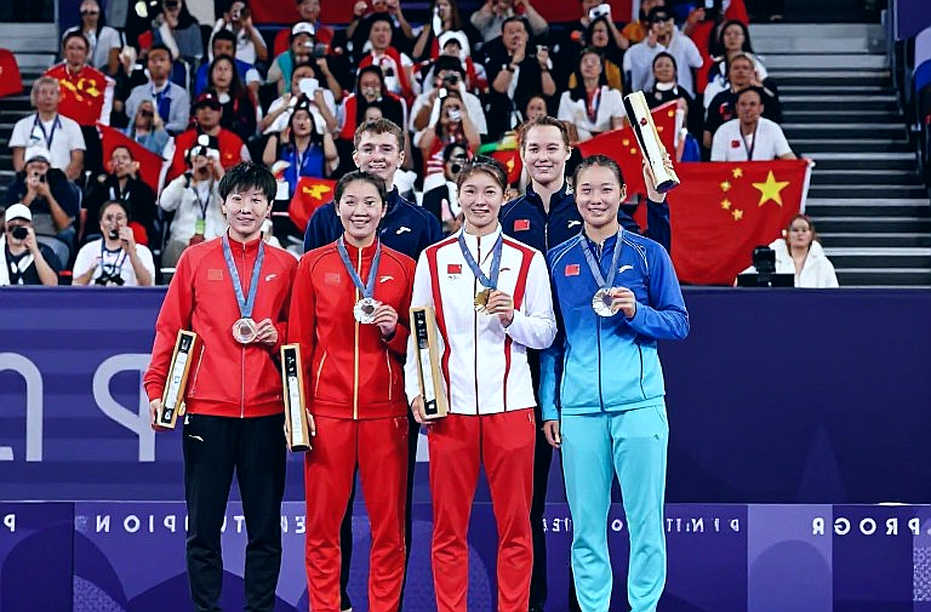
Second, women's singles depth. Three singles losses in one tie is not an accident of one day. It is a pattern. If that pattern repeats in the next team events, this is a structural problem of India's women's programme, not the form of a few individuals.
Third, the young generation. Names like Ayush Shetty, Unnati Hooda, Tanvi Sharma were sent onto the court in big matches. That is a signal of investment. But investment only means something if, a year or two later, those names appear in the deep rounds of the World Tour system, where no team-mate stands behind you.
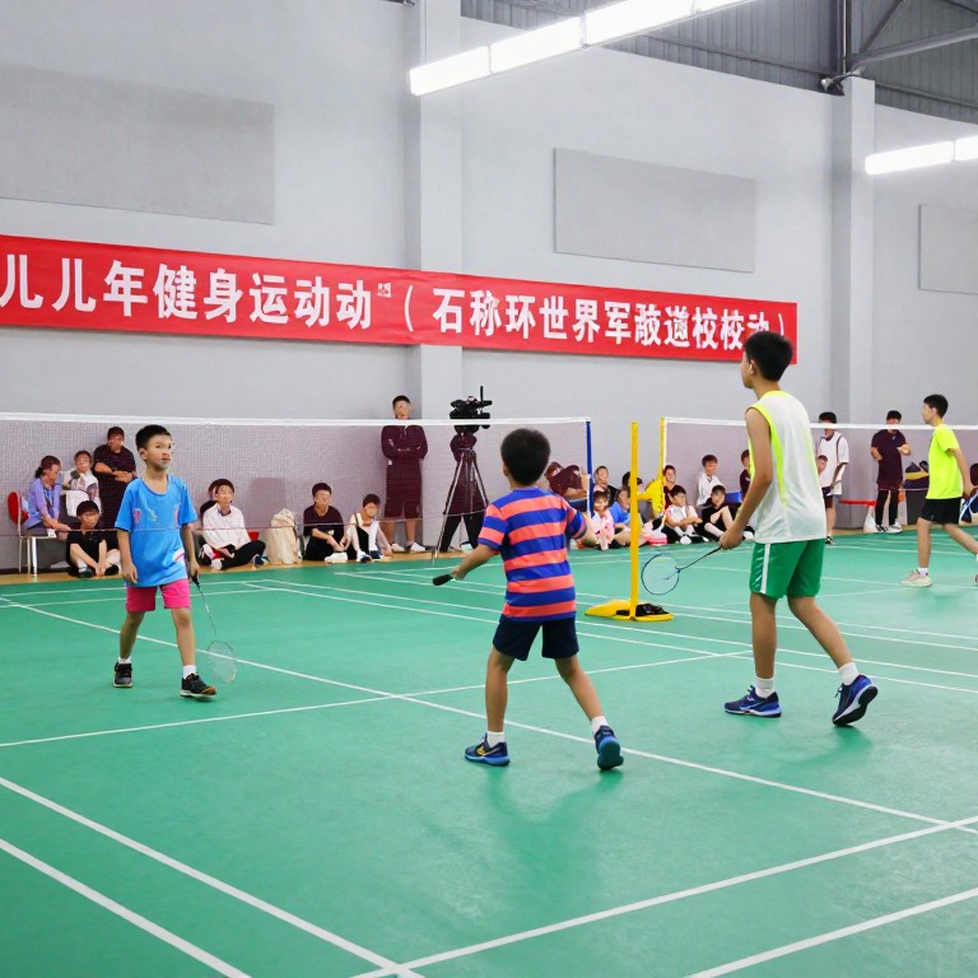
And the last thing, which I perhaps should not write in a news report, but I write anyway because this is how I work: I will try to confirm that these Games actually took place. One detail that day made me pause — the Ichinomiya gymnasium is in Aichi-Nagoya, precisely where these Games are designated to be hosted. That detail does not prove anything. But it is consistent. And for a man who has counted every kilometre and every conversation to reconstruct a match, consistency is also a form of evidence, just a weak one.
At fifty-seven, I still plug my recorder into the technical area to listen to players breathe. Not to find a quotable line. But to hear how a women's team walks off the court after losing three singles, and with what rhythm it breathes. That is the thing a scoreboard never records. That is the thing I record.
The stands are a silent teacher; I am only a pupil who knows how to bow.